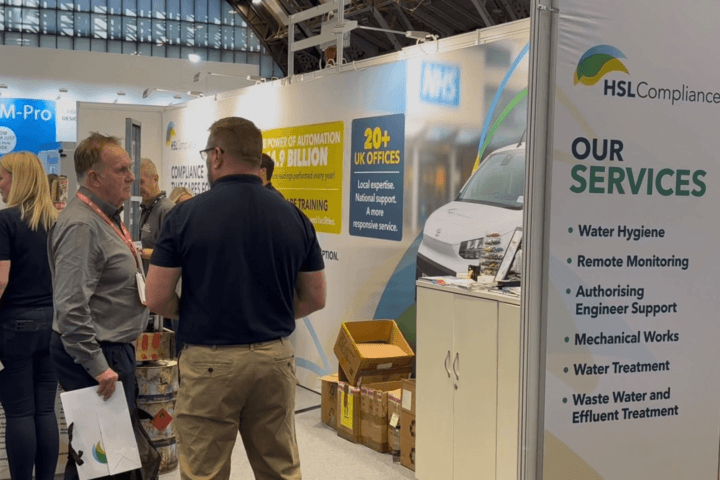
HSL Compliance attended IHEEM Healthcare Estates alongside healthcare estates and facilities professionals on 13-14 October at Manchester Central. Throughout the two days, we shared ideas and had conversations focused on safer, more effective healthcare environments. Alongside colleagues from RJ Urmson and HSL Plexus, we brought together expertise from across the HSL Compliance Group. In addition, […]
We’re proud to support the next generation of talent! 🌍🏉🏐 HSL Compliance is delighted to sponsor 48 students from John Kyrle High School as they embark on an unforgettable sports and cultural tour to Canada! As part of our support, we’re proud to have sponsored the team’s training tees, which they’ll wear as they prepare […]
The countdown is on… our Snowdon climb is happening this Sunday! 🏔️✨ Our team will be taking on the highest mountain in Wales as part of our Walk This May fundraiser in support of Make-A-Wish UK. There’s still time to support us and help raise vital funds for this incredible charity. Every donation makes a […]
As some of you will know, 18 September 2023 was ‘World Water Monitoring Day’. This is an initiative that has appeared under a number of guises since 2003 and is intended to raise awareness of the importance of water quality and the monitoring that takes place to ensure water supplies remain safe. Although the principal focus of World Monitoring Day is on the quality of water supplies, e.g., dissolved oxygen, salinity, pH and the presence of toxic chemicals and pesticides, we might also take this opportunity to review how we monitor water quality in the built environment.
In the UK, this largely involves monitoring the controls applied to domestic water to manage risks from Legionella and Legionnaires’ disease that the bacterium can cause. There is a panoply of control measures that need to be in place to ensure water is safe, which centre on principles of keeping water outside of the growth temperature range of Legionella, keeping water systems clean and free from biofilm, making sure water does not stagnate within water systems and, in some circumstances, adding biocides to the water to help restrict microbial growth. All of these measures need to be checked regularly to ensure that whatever controls are being applied, they remain effective.
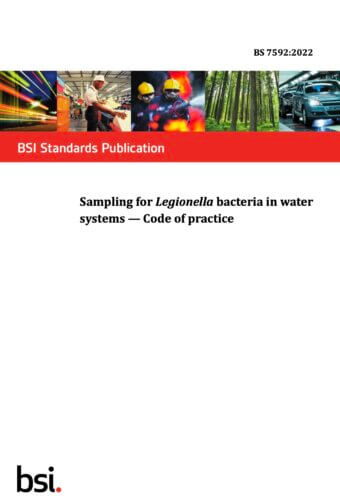
Seen by some as the acid test to provide assurance of control is the testing of water for the presence of Legionella, and there is no doubt that effective sampling and testing is an important part of the monitoring strategy in many circumstances, e.g., in some healthcare domestic water systems, evaporative cooling plant and spa pools. In 2022, the British Standards Institution (BSI) revised its standard BS 7592 ‘Sampling for Legionella in water systems – a code of practice’. This resulted in the third edition of the standard, the first being published in 1992, revised in 2008 and now in its 2022 version.
The new guidance takes into account other advances in the way water safety is managed, introducing the role of Water Safety Groups in devising effective sampling plans which can then be incorporated in Water Safety Plans. It also recognises the role of modern detection methodologies, such as PCR and MPN as alternatives to the traditional plate count methods, the importance analysing samples within recommended timeframes, and gives updated advice regarding the efficacy of neutralising agents against certain biocides. There is new guidance warning against the practice of pooling of water samples taken from multiple outlets, and also on the risks that may be introduced if cold water storage tanks are opened for sampling, advising that such samples should be taken from a dedicated sampling valve or from the nearest cold water outlet supplied by the tank.
Importantly, the new version of BS 7592 gives advice on sampling plans that should be developed and implemented during the commissioning of new or refurbished water systems, and those that should be applied for reactive sampling undertaken during investigational work.
All in all, although much of the standard has remained unaltered, there are a number of significant changes that we, here at HSL Compliance, have been working through to ensure we offer Legionella sampling services that are aligned with the new standard. Helpfully, BSI has published a tracked changes copy of the revised standard to make it easier to identify the changes introduced in the new version. Copies of both can be purchased from the BSI webpages (https://knowledge.bsigroup.com/products/bs-7592-sampling-for-i-legionella-i-bacteria-in-water-systems-code-of-practice-1/tracked-changes).
We hope this has been informative and that you’ll be back again for next month’s blog!