HSL Compliance attended IHEEM Healthcare Estates alongside healthcare estates and facilities professionals on 13-14 October at Manchester Central. Throughout the two days, we shared ideas and had conversations focused on safer, more effective healthcare environments. Alongside colleagues from RJ Urmson and HSL Plexus, we brought together expertise from across the HSL Compliance Group. In addition, […]
We’re proud to support the next generation of talent! 🌍🏉🏐 HSL Compliance is delighted to sponsor 48 students from John Kyrle High School as they embark on an unforgettable sports and cultural tour to Canada! As part of our support, we’re proud to have sponsored the team’s training tees, which they’ll wear as they prepare […]
The countdown is on… our Snowdon climb is happening this Sunday! 🏔️✨ Our team will be taking on the highest mountain in Wales as part of our Walk This May fundraiser in support of Make-A-Wish UK. There’s still time to support us and help raise vital funds for this incredible charity. Every donation makes a […]
In March 2022, the Legionella Control Association (LCA) published a newsletter that discussed Legionella positivity rates in water samples taken from building water systems before and after the COVID-19 lockdowns. The principal focus of the article was to compare the figures to try and understand the effects that taking buildings out of normal use had on the safety of their water systems. Perhaps not surprisingly, the data indicated higher positivity rates post lockdown compared to beforehand, and that the number of bacteria isolated from individual water samples was also higher following lockdown.
In addition to these observations, the data set used in the article also showed that a species of Legionella, Legionella anisa, was isolated from water samples at a frequency (53%) that was higher than expected by the authors, exceeding that for L. pneumophila (32%). The authors then pointed to the fact that, in the UK, the urinary antigen test (UAT) is the most commonly used tool to diagnose Legionnaires’ disease and that it is limited to detecting cases of infection caused by L. pneumophila serogroup 1 only. They then went on to postulate that the inability of the UAT to detect infections that might be caused by species of legionellae other than L. pneumophila might indicate that over 70% of cases of Legionnaires’ disease in the UK may be going undetected.
In my opinion, this is a flawed argument; just because legionellae (of any species) are detected in a water system, this does not necessarily equate to cases of infection. In fact, we’ve known for quite some time that L. anisa is commonly isolated from the environment (14%), along with L. pneumophila (28%), but that L. anisa is very rarely found in clinical specimens (0.8%, compared to 95.4% for L. pneumophila) (Doleans et al., J Clin Microbiol 2004 42(1): 458-460). What is perhaps less clear is whether or not using UAT as the first-line diagnostic tool is skewing the UK data in the direction L. pneumophila, and missing cases of Legionnaires’ disease caused by other species. It’s an argument that’s often made but I think it’s unlikely. I say this because Legionnaires’ disease is such a serious infection, the likelihood that significant numbers of people could have the disease and it go unnoticed and undiagnosed seems remote, although I do think that this might be possible in certain limited circumstances, e.g., in nursing and care homes, but there are insufficient data to support this, currently.
To get to the answer, we might need to look outside of the UK. In a report from Denmark (https://en.ssi.dk/news/epi-news/2020/no-20—2020), which has one of the highest rates of documented cases of Legionnaires’ disease in Europe. Here, polymerase chain reaction (PCR), rather than UAT is the principal diagnostic approach and, therefore, cases of Legionnaires’ disease caused by any species of legionellae are detected. The Danish report showed that 93% of PCR-diagnosed cases in 2019 were caused by L. pneumophila, and that only a single case out of 112 that were culture verified could be confirmed as being caused by species of legionellae other than L. pneumophila. The picture was similar in 2020 (https://en.ssi.dk/news/epi-news/2021/no-18—2021), with 93% of PCR-diagnosed cases caused by L. pneumophila and only 2 cases confirmed by culture as being caused by other species, and an additional 11 cases were confirmed as non-pneumophila species by PCR, but not by culture. Interestingly, the report also found that 18 people that returned positive PCR test results for Legionella spp. were asymptomatic, suggesting that in most cases, infection by species other than L. pneumophila is not clinically significant.
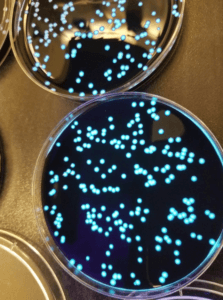
So, whilst L. anisa (and other Legionella spp.) might be present in water systems, as shown in the LCA data, it is unlikely to mean that, because of this, a significant number of cases of Legionnaires’ disease are going undetected in the UK. However, I do think that detecting other species in water systems should be cause for concern, even if L. pneumophila is not detected in water samples. I say this because the additional tests used by many laboratories to speciate legionellae isolated on plates can rely on testing only a very few colonies from the plate and then extrapolating the results to cover all colonies present, which may run into hundreds. So, it’s entirely plausible that L. pneumophila might be present on an isolation plate, but not be selected for speciation and therefore go unrecognised. Moreover, because most water systems are usually far from uniform in respect to the conditions that exist within them, L. pneumophila might exist in one part of a system and Legionella spp. in another, but the fact that either are found can be indicative of a water system that is not being managed effectively. In my opinion, therefore, detection of any species of Legionella in water samples should be cause for concern, not because of the health risks posed by Legionella spp., but because L. pneumophila may also be present, and we know that this bacterium has the potential to cause serious harm.